- /
The Basics of Buying Land in North Carolina
Written by:
Chris St. Clair, Owner
Carolina Land Network
Chris@CarolinaLandNetwork.com
If you're thinking about buying land in North Carolina—whether it’s for a future home, a peaceful weekend getaway, or long-term investment—you're not alone. A growing number of buyers are ditching the cookie-cutter house hunt and turning to land. And while it's not necessarily more complicated than buying a house, it is different. Here's what you should know before you jump in.
1. Financing: Land Loans vs. Other Options
Financing land isn't as straightforward as financing a home. Most traditional banks are only comfortable lending if you're planning to build right away. That’s because land is considered a higher-risk asset. It doesn’t generate income, and its value depends on what you might do with it someday, not what’s already there.
If you don't plan to build soon, you're probably not going to qualify for a standard construction-to-perm loan.
Here are some options that tend to work better:
-
AgSouth Farm Credit (Western NC)
-
AgCarolina Farm Credit (Eastern NC)
-
Local credit unions (Avoid NCSECU—they don’t finance land at all)
These lenders understand rural land and are usually more flexible than the big banks.
2. Zoning and Surrounding Use
Before making an offer, take a good look at zoning. Not just your parcel, but everything around it. That beautiful wooded lot could feel very different in five years if the land next door is zoned for a truck depot or large subdivision.
Zoning rules control what you can build and how you can use your land. Some parcels look rural but carry heavy restrictions. Call the local planning department or check the county GIS site for zoning info.
3. Soil Testing and Septic Approval
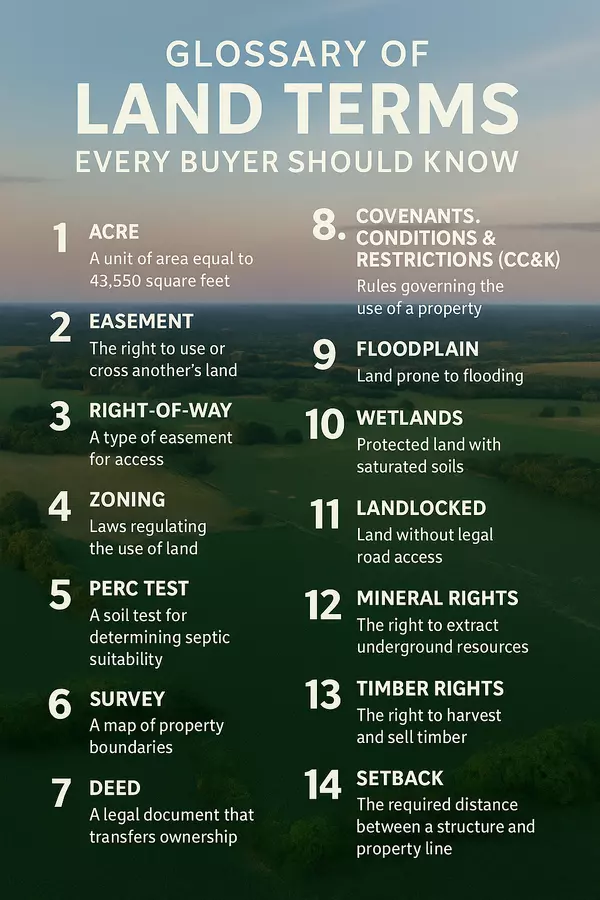
Most rural land in NC is on septic, not public sewer. Before you buy, you’ll want a soil suitability test (previously called a "perc test"). This test confirms whether the land can support a septic system and for how many bedrooms.
Costs can range from $300 to several thousand dollars depending on your location and whether you're using a private soil scientist or the local health department. It usually takes 2 to 4 weeks. No test = no guarantee you can build.
4. Surveys: Know What You’re Buying
Surveys aren’t always required, but they’re a smart investment. They confirm boundaries and uncover potential issues like encroachments, shared driveways, easements, or access problems.
Don’t rely on old plats or assumptions. You’d be surprised how often fences, barns, or even driveways sit partially on the wrong property.
5. Access: Legal vs. Actual
Just because there's a path or driveway doesn’t mean you have legal access. Plenty of parcels in NC are landlocked or depend on verbal or historic agreements with neighbors.
You want deeded, recorded access on paper. Without it, lenders won’t finance, and you could end up fighting for your right to get to your own land. If you're unsure, ask a closing attorney to verify access rights before you commit.
6. Utilities: What’s Available?
Always ask what utilities are available and what's not.
Will you need to drill a well? Run a power line? Install a septic system? These things add cost and time. If you're dreaming of off-grid life, make sure the land supports solar, rainwater collection, or whatever setup you're planning.
7. Deed Restrictions and HOAs
Zoning tells part of the story, but deed restrictions and HOA rules can be even more limiting.
Some land has restrictions like:
-
No mobile homes
-
No RVs or campers
-
No short-term rentals
-
No livestock or fencing
Always get a copy of the deed and any recorded covenants. What you don’t know can hurt you.
8. Topography and Flood Zones
Walk the land. Look at slope, drainage, and elevation.
Steep or rocky land can be costly to build on. Low spots might flood or require serious grading. Use FEMA flood maps and county GIS tools to check for floodplains or wetlands before making an offer.
9. Mineral, Timber, and Water Rights
In some parts of NC, the surface rights don’t include mineral, timber, or water rights. That means someone else could have the right to log the land, drill for resources, or use the water—even if you own the parcel.
Make sure these rights haven't been leased or sold off by a previous owner. Your closing attorney or title company can verify this.
10. Land Use History and What’s Next
Try to find out what the land has been used for. Farming? Hunting? Timber? Was there ever a structure?
Land with a history of mobile homes or previous construction might still have buried debris, old septic tanks, or utility connections. On the flip side, long-vacant land might have never been tested or improved in any way.
Also, check in with the local planning department. Are there new roads coming? Proposed rezoning? Nearby subdivisions planned? It’s always good to know what’s on the horizon.
11. Property Taxes and Present Use Value (PUV)
Some land qualifies for Present Use Valuation (PUV), which significantly reduces the annual property taxes if the land is used for agriculture, forestry, or horticulture.
But be careful: if the land use changes, you could get hit with rollback taxes—basically, back taxes for up to 5 years.
12. Title Work and Closing
In NC, real estate closings are handled by attorneys. This is a good thing.
Have your attorney do a full title search to look for issues like unpaid taxes, unrecorded easements, or ownership disputes. Don’t skip title insurance either—it’s cheap peace of mind.
13. Work With a Land Specialist
Land is a different animal. If your agent mostly sells houses in subdivisions, they might not know what to look for when it comes to soil, zoning, easements, or access.
At Carolina Land Network (CLN), we work with buyers and sellers across North Carolina every day—helping them navigate land transactions the right way. Our team specializes in rural land and farm properties, and we know what to look for and who to call when questions come up.
Find someone who actually specializes in land. It’ll save you time, money, and potential mistakes down the road.
Have questions or need help getting started? That’s what we do. Reach out any time—we’re happy to help you navigate the process and find the right piece of land for your goals.
Categories
Recent Posts